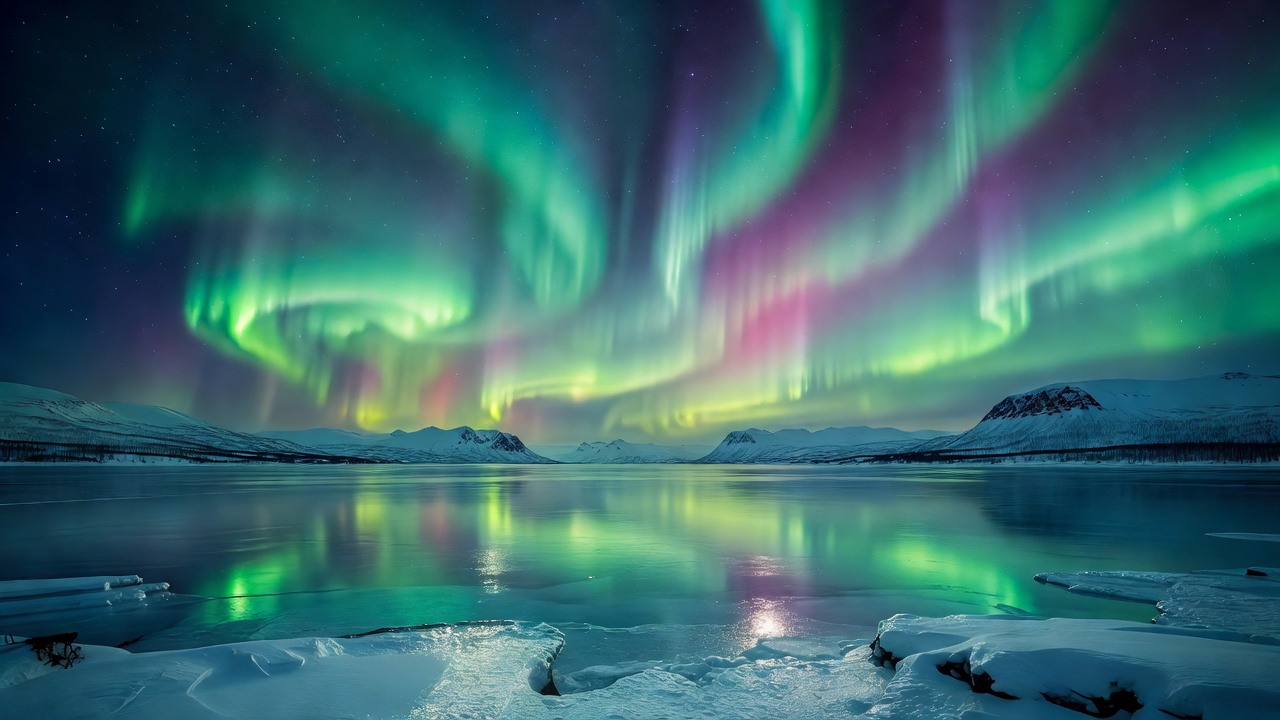
The Science Behind the 'Blue Hole of Abisko'
The primary enemy of any Northern Lights enthusiast is not low solar activity, but thick maritime cloud cover. Abisko National Park overcomes this through a profound orographic rain shadow. Prevailing westerly winds carrying Atlantic moisture strike the high mountains along the Norwegian border, depositing their snow before reaching Lake Torneträsk.
As the air descends into the Abisko basin, it warms and dries adiabatically. This creates a persistent clear opening in the clouds directly above the valley, providing observers with an astonishing 83% to 88% statistical probability of seeing the Aurora Borealis during any three-night winter stay.
Aurora Sky Station on Mount Nuolja
Take the open chairlift up Mount Nuolja to the Aurora Sky Station at 900 meters elevation. This eliminates valley moisture and places you above any potential thermal inversion ground fogs.
Essential Vantage Points in the Park
- Lake Torneträsk Shoreline: An enormous 70-kilometer long frozen freshwater lake offering an unobstructed northern horizon devoid of foreground obstacles.
- Abiskojaure Canyon: The rushing river freezes into massive turquoise ice sculptures that glow under ultraviolet and green auroral emissions.
- Björkliden Overlook: 8 kilometers northwest, offering dramatic vantage points overlooking the iconic U-shaped valley known as Lapporten (The Gateway to Lapland).
Expedition Pros
- Highest statistical percentage of clear nights in Arctic Europe.
- Zero urban light pollution within the national park boundaries (Bortle Class 1).
- Direct scenic train link (Arctic Circle Train) from Stockholm and Narvik.
Expedition Cons
- Extremely limited lodging inside the park—bookings require 6+ months advance notice.
- Continental winter temperatures can drop below -32°C in January.
- Minimal nightlife or dining options outside national park lodges.
Official Swedish Environmental & Travel Links
For park rules and trail condition bulletins, visit the official Swedish National Parks Service (Sveriges Nationalparker) and the STF Abisko Mountain Station Portal.